
About Our Logs
We offer four types of firewood, each with unique benefits


Firewood Facts: Everything You Need to Know

Kiln Dried Hardwood
Ready to Burn (Certified WS524/1)
<18% moisture – Dried in our wood-fuelled, carbon-neutral kiln
Burns efficiently – Ready to use immediately
At peak times, we may supplement with imported kiln-dried logs*

Barn Stored Hardwood
Ready to Burn (Certified WS524/2)
<20% moisture – Naturally air-dried
Reliable, long-lasting burn

Softwood
Ready to Burn (Certified WS524/3)
<20% moisture – Naturally air-dried
Gentler heat with a pine aroma and lively crackle
 Caution: Can pop and spit—use carefully in open fireplaces
Unseasoned
≈50% moisture (varies with weather). NOT ready to burn – requires 18+ months drying
Minimum order: 2.25m³ (UK Government pollution reduction regulation)
Order a season or two in advance for optimal drying
Energy & Efficiency
Softwood & hardwood have similar energy content (≈4kWh/kg) when properly seasoned.
Wet/unseasoned wood
- Wastes energy evaporating water that does not Burn effectively cooling the fire
- Reduces heat output by up to 50%
- Causes tar/creosote build-up (chimney fire risk)
- Blackens stove glass
Hardwood vs Softwood
Hardwood
- Denser, heavier
- Longer burn time
- Takes up less space per kW
Softwood
- Less dense, lighter
- Quicker, hot burn
- More crackle & aroma
Sustainable Sourcing
- 100% British wood* from local, sustainable sites (minimising carbon footprint)
- Hardwood mix: Oak, Ash, Beech, Alder, Birch, Cherry, etc.
- Softwood mix: Pine and other conifers
Our Process
We carefully prepare our firewood to help ensure quality, consistency, and efficient burning.
Seasoning
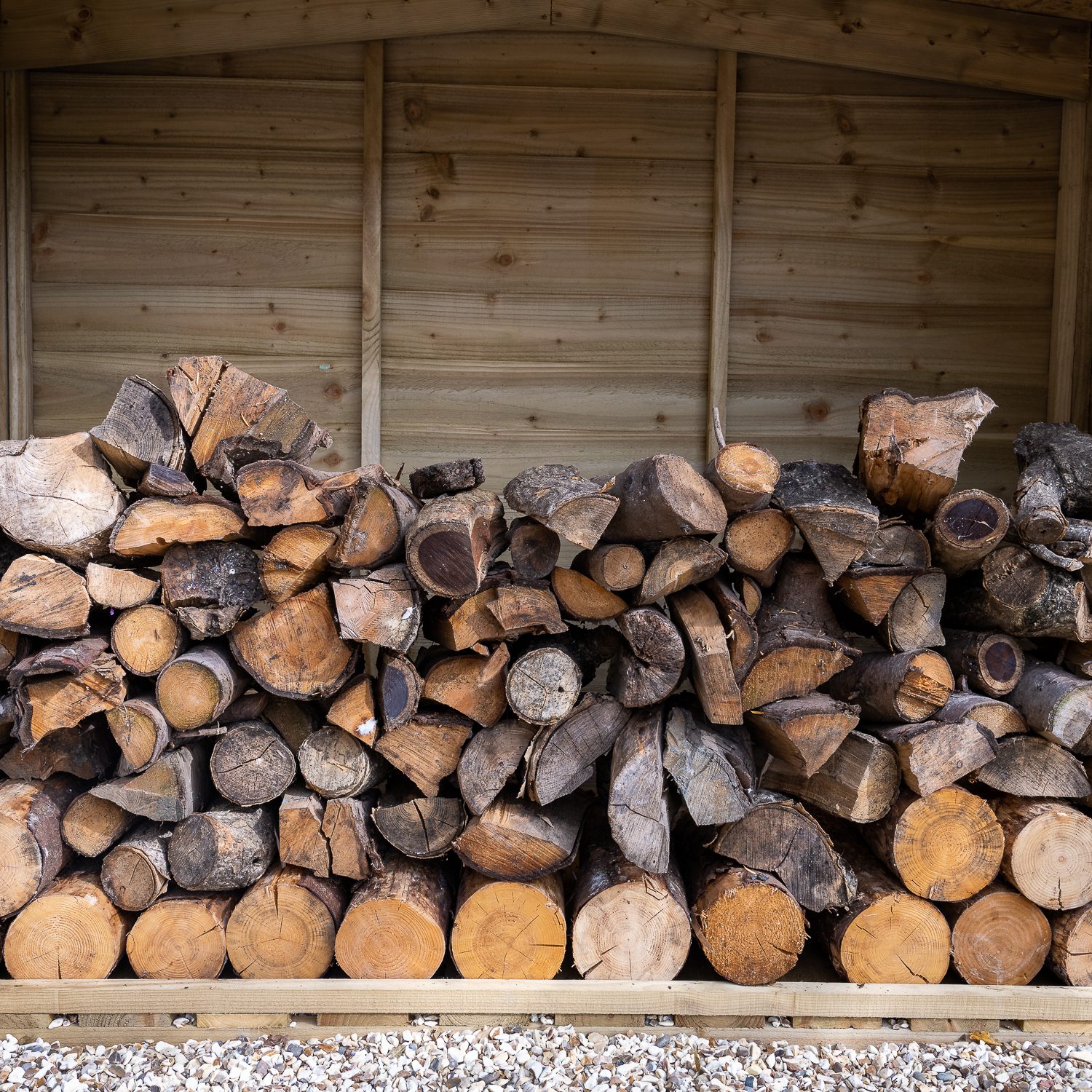
Wood is stored in piles for several months to reduce moisture content.
Cutting & Splitting
Logs are cut to length (±12% tolerance) and split to encourage faster drying.
Cleaning & Grading
Hand-sorted for quality. Natural variations in colour, bark, and shape are normal.
Stove & Chimney Maintenance
✅ Essential for safety & efficiency:
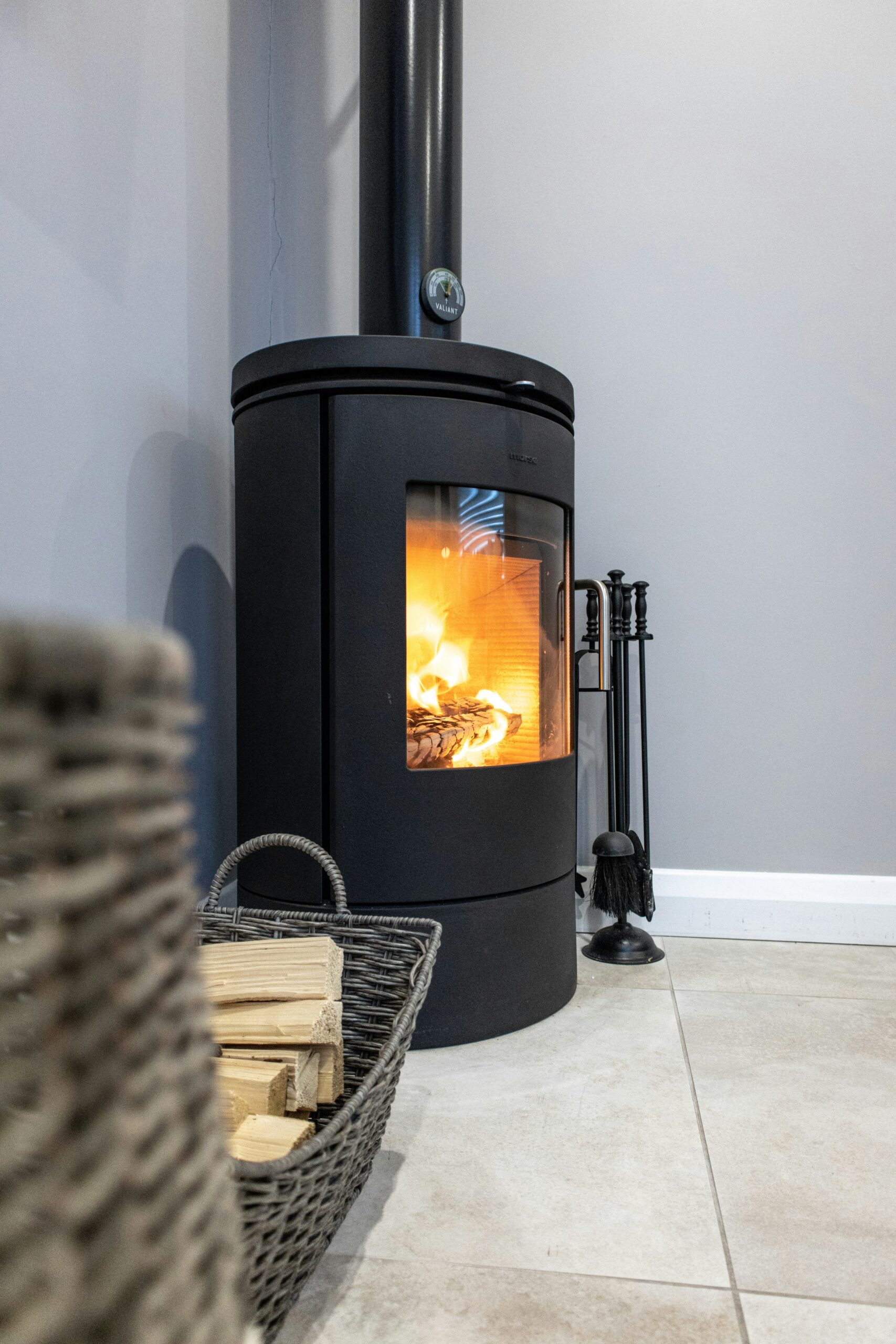
- Sweep your flue regularly (best after the heating season)
- Prevents soot build-up, damp, and odours
- Insurance requirement: Many policies won’t cover chimney fire damage without proof of professional maintenance.
🔍 Recommended Services:
- Rope replacements
- Bird’s nest removal
- Carbon monoxide alarms (test regularly!)
- Pressure tests & landlord certificates
- Camera inspections
⚠️ Carbon monoxide is a silent killer—ALWAYS use an alarm!
📖 Useful Resources:
📢 Important Update: Industry insight for details on recent challenges.
Volume, Weight & Stacking
Why We Sell by Volume (Not Weight)
- Wet logs weigh more than dry logs of the same volume.
- Our delivery vehicles have measured compartments (1.5m³ each) for consistent loads.
- Guaranteed quantity: Up to 9m³ per delivery in 1.5m³ increments.
Stacking Tips
- Loose logs contain air gaps—stacking reduces volume by 30–40%
- 1.5m³ loose logs stack to ≈ 0.8–1.05m³ (~1700kWh energy)
- For drying: Stack with airflow (avoid full tarpaulin coverage).
- For ready-to-burn logs: Cover to protect from rain.
- Location: Face your log store away from rain/wind (south-facing ideal).
Storage Calculator
Wood Store Volume Calculator
Beware of Misleading Offers
⚠️ Some suppliers advertise "a trailer load" or "bulk bag"—these are somewhat undefined quantities. With us, you always know exactly what you’re getting as the compartments in our custom made Lorry Bins & Trailers are 1.5m³ ensuring you get what you ordered.

